Spring into action: Blue KC volunteers plant orchard at DeLaSalle Learning Farm
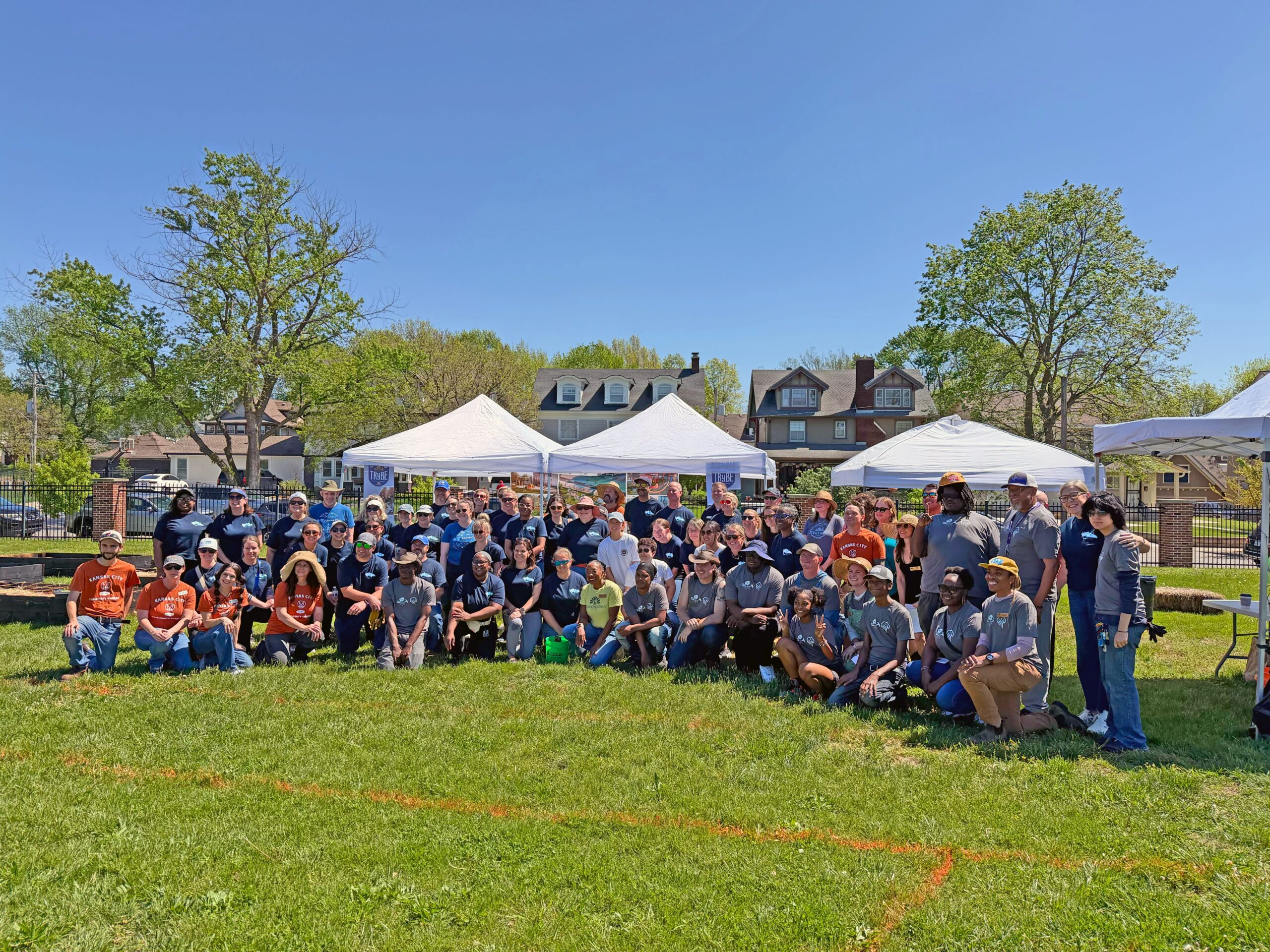
Can you imagine if a high school in the urban core of Kansas City, Missouri, had free access to fruits and vegetables in their own backyard? That dream started growing into reality, as 92 high school students and 43 volunteers from Blue Cross and Blue Shield of Kansas City (Blue KC) planted an orchard at DeLaSalle Education Center on 37th and Troost as part of the school’s Learning Farm initiative.
“It’s kind of like that exciting feeling in your chest because it’s like, wow!” said Ji’Ziah Anderson, junior at DeLaSalle Education Center. “It used to be so dry in this field, and there wasn’t anything we could do. Now, there are plants and trees. We’re growing fruit. That’s a big deal.”
“It’s very heartwarming,” said Rebecca Anderson, Director of Community Health at Blue KC. “We’re working alongside the students, and the students are teaching us. That’s the cool thing.”
Local team effort to build learning farm
Blue KC, behavioral and mental health nonprofit Cornerstones of Care, its vocational program Build Trybe, The Giving Grove and Kansas City Community Gardens are teaming up to help DeLaSalle’s long-term vision of becoming one of the leading urban farming schools in Kansas City.
“We are all about empowering community to grow their own food, and there is nothing better than getting to empower a group of high school kids who have a vision to bring food to their neighborhood,” said Jennifer Meyer, Executive Director at Kansas City Community Gardens.
“DeLaSalle Education Center came to Build Trybe and Cornerstones of Care, and they said, ‘Hey, we want an urban farm,’ but there was no funding or support,” said Theo Bunch, Director of Build Trybe. “With Blue KC coming to the table, suddenly that desire became a very real potential, and now that potential has turned to trees in the ground.”
“At Blue KC, the only locally based nonprofit health insurer that’s been in this community for almost 90 years, our support for community health is greater than it’s ever been, especially around projects like this,” said Rebecca Anderson.
What’s growing on the farm
The orchard planting included a total of 20 trees representing:
- 3 pecan – 2 varieties
- 3 jujube – 2 varieties
- 3 cherry – 3 varieties
- 3 peach – 3 varieties
- 3 Asian pear – 3 varieties
- 2 European pear – 2 varieties
- 3 apple – 3 varieties
“All told, this orchard will have the ability to produce almost 4,700 pounds of food annually, and over its lifetime, it has the potential to produce 103,000 pounds of food,” said Matt Bunch, Director of Horticulture, Education and Orchards at Kansas City Community Gardens. “It will inspire generations to grow their own food!”
The following were planted in berry beds:
- 4 Saskatchewan bush cherries – 2 varieties
- 10 raspberry – 1 variety
- 8 blackberry – 1 variety
Students and volunteers also planted fruits and vegetables in 20 raised garden beds, as produce on the new one-acre outdoor farm will be made available to the local community and serve the historic DeLaSalle Education Center in the heart of the Troost corridor.
“We’ve got garden beds that are going to give us spring greens,” said Meyer. “They’re going to give us tomatoes and peppers in the summer. They’re going to give us produce all the way into the fall. That’s going to help feed the school and feed the neighborhood around us, too.”
Farm aims to improve food insecurity
The initiative will help address food insecurity, as one in seven people and one in six kids in the Kansas City region are at risk of hunger. Access to nutritious food is critical to health and resilience. Sixty percent of U.S. adults live with one or more diet-related chronic health conditions, underscoring the potential for increased access to healthy foods to improve health outcomes nationwide.
“The area is what you call a food desert, meaning there’s not great access to grocery stores, which is why we need a program like this that brings fresh produce to our community,” said Rebecca Anderson. “About 19% of Jackson County residents are food insecure. People are having to make hard choices when it comes to food, such as deciding between food and utilities or food and seeing the doctor. Projects like this help stretch people’s dollar.”
“My mom will definitely like me bringing food to the house,” said Ji’Ziah Anderson. “She likes gardening. I want her to try this food on the farm and know that I helped make it.”
Future fun on the farm
Plans for the Learning Farm include:
- Playground
- Berry patch
- Duck pond
- Hoop house
- Chicken coup
- Outdoor eatery
- Outdoor theater
“Being a young person in this world is stressful,” said Theo Bunch. “How great that they can come out into this space, where they can enjoy some fresh fruit, they can hang out in a hammock, they can feed a duck and they can just take a moment to have an escape from all of the craziness of this world while learning skills and improving the health of our community!”
“I can’t wait to see the animals,” said Ji’Ziah Anderson. “It’s a blessing in disguise to learn new skills. I can take those skills into the future with me.”