How mental health impacts women
Anxiety, depression and burnout are some of the three most common mental health issues that affect women, according to Blue Cross and Blue Shield of Kansas City (Blue KC) behavioral health expert Rebekah Adams.
Adams points to three common experiences that impact women’s mental health:
- Disproportionately carrying invisible mental and emotional labor
- Chronic stress from sustained caregiving and related responsibilities
- Internalizing social expectations in ways that shape confidence and well‑being, which if internalized in a negative way, shows up as self-doubt and could lead to diagnoses of depression or anxiety
“If you’re going into a situation not as confident or if something goes wrong, women are more likely to attribute it to being a fault of their own as opposed to the circumstance or an outside external factor that might be influencing that breakdown,” said Adams, who serves as the Integrated Health Advancement Program Manager at Blue KC. “Over time, that can wear on mental health and lead to things like anxiety or depression.”
What advice does Adams have to help with that experience?
“Thinking about ‘what are the things that I did well? Where are the ways that I gave it my all or engaged well in the situation? How did I contribute to things going successfully’ are ways that women can reduce that internalizing process that takes place.”
Mental health and women in the workplace
Studies have shown that women are 1.5 times more likely than men to leave their job because they want to work for a company that is committed to their well-being.
“Women present with and report more motivation and engagement in their jobs than men,” said Adams, who is also a licensed marriage and family therapist. “Oftentimes, that shows up as being the first to volunteer for things or taking on more tasks than required. Sometimes, that can lead to burnout. Women want to do more but also tend to be more stressed as a result.”
According to Adams, over half of women report feeling stressed during the day, compared to about 39% of men.
“We need to be intentional with what we’re putting on our plates,” said Adams. “Women are good at seeing what needs arise in a situation and then take it on without question. And many then rely on that process as a way of things getting done. But just because you can do it doesn’t mean it’s yours to take on. I think that’s something that women can forget sometimes. They might feel capable that they then take it on when really, they don’t need to because somebody else is also capable of taking it on or even more appropriately responsible to do it.”
Blue KC supports women at mental health retreat
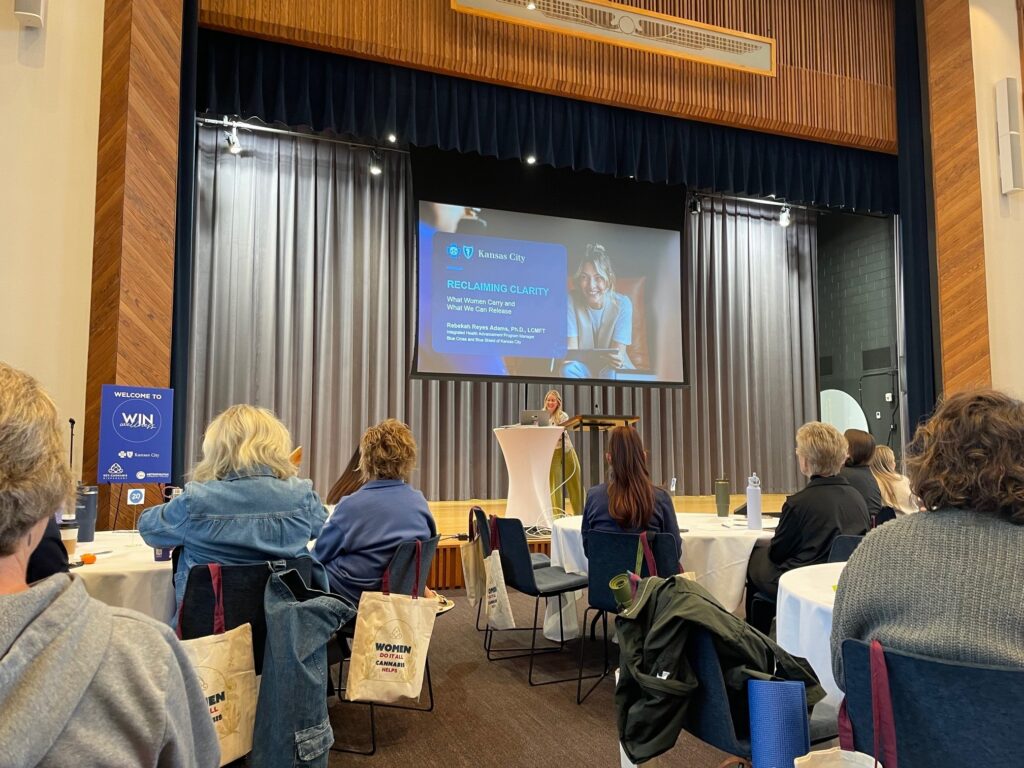
Adams shared lessons related to work-life balance to more than 100 businesswomen in Kansas City at the WIN for KC Corporate Women’s Health Retreat, presented by Blue KC in Unity Village, Mo.
“Some of the key indicators for companies for retention for women is when they really allow women to really take care of themselves, whether that be events like this, paid maternity leave and time for them to work remotely,” said WIN for KC Director Taylor Banks. “And we really tried to gear this day towards something that could help businesses increase retention of their female employees.”
In addition to learning tips to implement in their everyday lives, the retreat gave attendees a chance to participate in activities like yoga, a nature walk, and dance fitness.
“The fact that we made a day out of prioritizing our mental health was supremely integral for our well-being and continuing on to be the best that we can be, not only in our jobs, but personally, as friends, as moms, as wives and as partners,” said Angel McGee, People & Community Engagement Lead at Pro Athlete, Inc., who was one of the attendees.
“This retreat was really important for Blue Cross and Blue Shield of Kansas City to support number one, because we have our own female employees, but also we serve the Kansas City area and have over 1,000 employees who are working and living in this community,” said Adams. “You can’t care about the well-being of a community and not focus on mental health.”
If you are experiencing a medical emergency, call 911 or go to the nearest emergency department. In case of a mental health emergency, call or text 988.
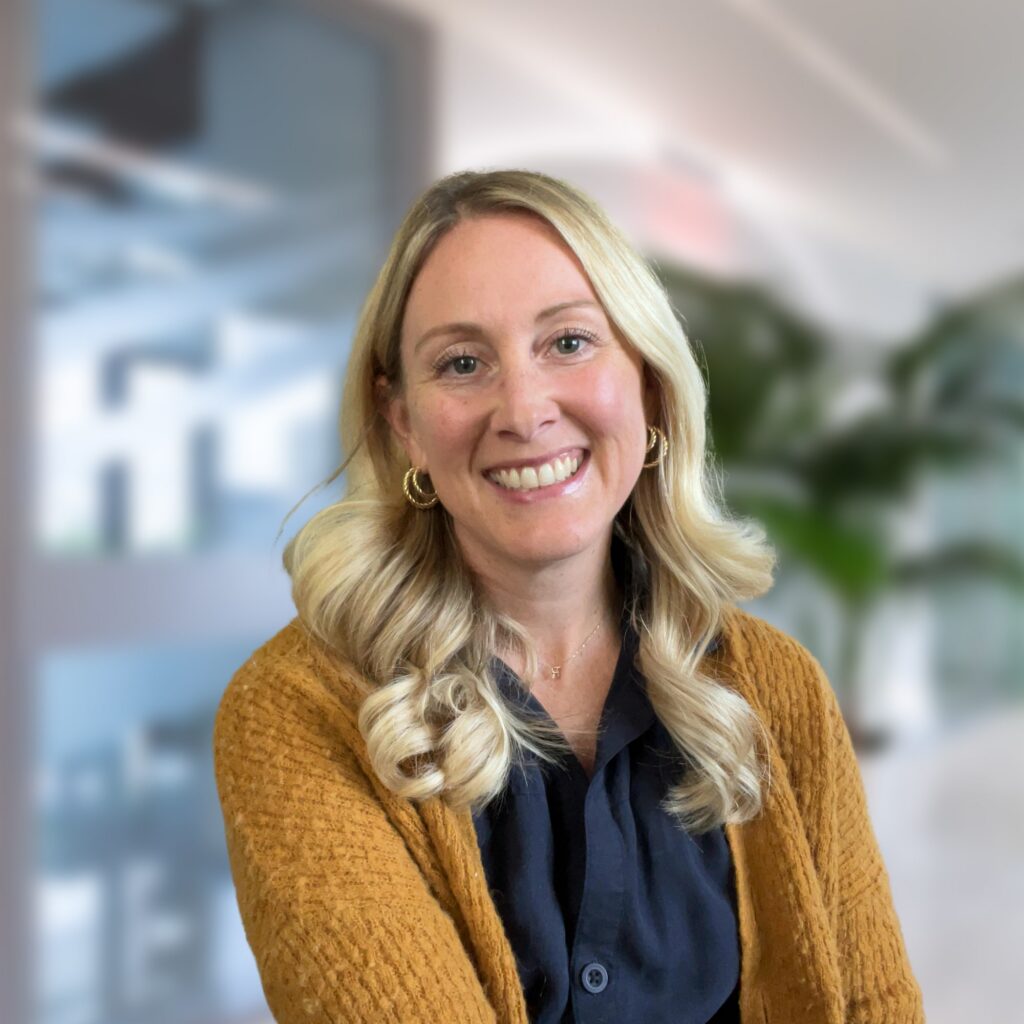
Rebekah Reyes Adams, PhD, LMFT, Blue KC
Rebekah Reyes Adams, PhD, LMFT, is the Integrated Health Advancement Program Manager at Blue KC. She is passionate about reducing the divide between treatment of physical health and behavioral health, which are deeply connected. Her work is shaped by years spent serving individuals, families, and teaching and mentoring graduate students. She enjoys being able to bring this experience to her role at Blue KC to support behavioral health programming.
Sources:
Gender Differences in the Accuracy of Self-Evaluations of Performance
Gendered Mental Labor: A Systematic Literature Review on the Cognitive Dimension of Unpaid Work Within the Household and Childcare
The state of the pipeline
More Than a Program: A Culture of Women’s Wellbeing at Work
Women Show Stronger Employee Engagement Amid Higher Burnout
Help employees improve well-being and performance